
 Last week I was visiting my grandson’s elementary school. I’m part of a program there in which parent volunteers read selected books to each class. These children’s books feature stories that show the importance of kindness and the avoidance of bullying. Teachers and volunteers develop these concepts further by talking, throughout the school year, about filling each other’s imaginary buckets with acts of kindness. So, each child strives to have a bucketful of kindnesses collected by the end of each day. Of course, this involves a lot of reciprocity. And, if someone is unkind to another student, it is as if they took a kindness OUT OF that child’s imaginary bucket. If they recognize this, they need to find a way to put a positive act back into the other’s “bucket.”
I think many of us go through the day on the receiving end of kindness as well as its many opposites … disappointment, indifference, and rejection, to name a few. As adults, most of us have learned to cope with the negative and to rejoice in the positive. School kids are not necessarily that resilient. Nor are they usually skilled in looking for opportunities to help each other, to help “fill someone’s bucket.” We adults may have learned coping skills, but have we truly learned to productively receive and deliver kindnesses throughout the day?
As we approach Thanksgiving, I thought a good topic might be to reflect on the things we do or say to help fill each other’s buckets with kindness. And, to recognize the way that others put kindness into our own buckets, even though we may be slow to recognize all these ‘random acts of kindness.’ At my writer’s group this morning, one of the quieter members laughed and smiled as I read a droll piece I had written. She could have remained silent, but her laughter and smile was affirming to me, going the extra mile to put some kindness in my bucket. She made eye contact as I left the group, and thanked me personally for the banana bread I had brought. The members of our writing group are routinely kind to each other, so this kindness I observed was “no big deal.” But, as I think back over the morning, I see her kindness resting in my imaginary bucket. And, if something frustrates me or disappoints me later today, I’ll think back on this, and be grateful. I’m trying to not take all these acts of kindness for granted, but to really notice, appreciate, and “pay kindness forward” — finding a way to be kind to someone in my everyday life.
So, here is this month’s challenge: What do you do to fill the buckets of others with acts of kindness? What acts of kindness do others put in YOUR bucket. Do you take time to notice? Could you perhaps write these down at the end of each day, keeping a gratitude journal? Is there someone in your life who has been especially kind to you? Would you like to write an essay about this person?
Please submit what you come up with!
 Click here to see what others have written!

 Can you remember your first day of kindergarten? First grade? Seventh grade? Chances are that you can’t, but you can reconstruct a scene that “rings true” to what your life was like at that time. Here’s an example from my own life (writing about seventh grade):
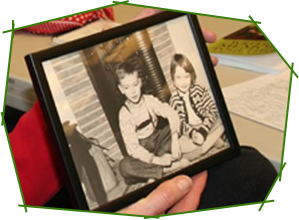 Photos of people at work or play are redolent with emotions and artifacts of the past. Candid shots include everyday surroundings — scenes and objects that elicit memories. A kitchen shot may include, for example, not only the expression on your aunt’s face, but the clock that fascinated you as a child — the one with dog paws for hands and a dog tail for the pendulum.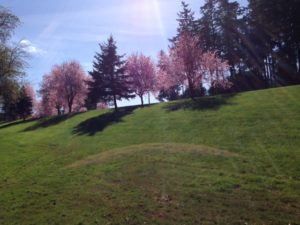
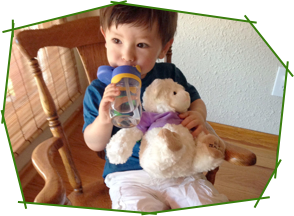 Poignant moments are abundant in our lives, and writing gives us a way to preserve them. Often we rely on photographs to preserve such moments, but most of the time we do not have a camera on hand when such moments occur. After all, they almost by definition occur by surprise, and it is often the element of surprise that adds to the poignancy.
 January is a time for resolutions and fresh starts. Yet, I also find that some writers lose a bit of energy at this time of year. The holidays take their toll on us. Plus, let’s face it: It’s hard to get up early and write when the skies are still dark, the floors are cold, and we just want to hibernate a bit longer under our warm winter quilt.
 I’ve learned some helpful tips from Martha Stewart. For example, I learned that I don’t need to go out and buy fall and winter foliage for my Thanksgiving and Christmas table centerpieces. Instead, I can just go in my backyard and pick out a few ferns, some small branches, and maybe a spray or two of berries. Pine cones can be found on the trail where I walk my dog. I can cluster these on the table and perhaps add a candle or two. Voila! And, I learned that it is fine to add one “misfit” flower or plant to an arrangement. Not everything has to match.
 Holiday memories can bring a special joy to the writer and the reader. Often we take comfort in common traditions while at the same time appreciating how each person’s memories are unique. Memoirs such as Dylan Thomas’s A Child’s Christmas in Wales come in the form of a composite, capturing highlights of Christmases (in Wales) in general.
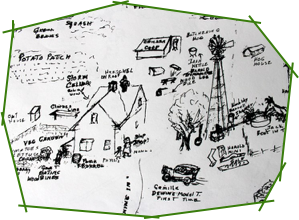 One powerful way to elicit memories is to sketch a simple map of a home or neighborhood you once lived in. This seems to access memories stored in the right brain. So, for example, you could sketch a floor plan of a childhood home, or a simple map of your immediate neighborhood. If you spent a lot of time outdoors, a diagram of your yard can also be fun to draw and think about. You might also enjoy drawing a floor plan of your school, your public library, or any place that was significant to you at some time during your life.
 As children, we experienced the end of summer along with the excitement of returning to school. In most cases, we had a mix of emotions … joyful anticipation of seeing our friends, but also a bit of anxiety about the work, and perhaps some sadness about returning to confinement!